Bridges worth crossing
Remarkable Bridges
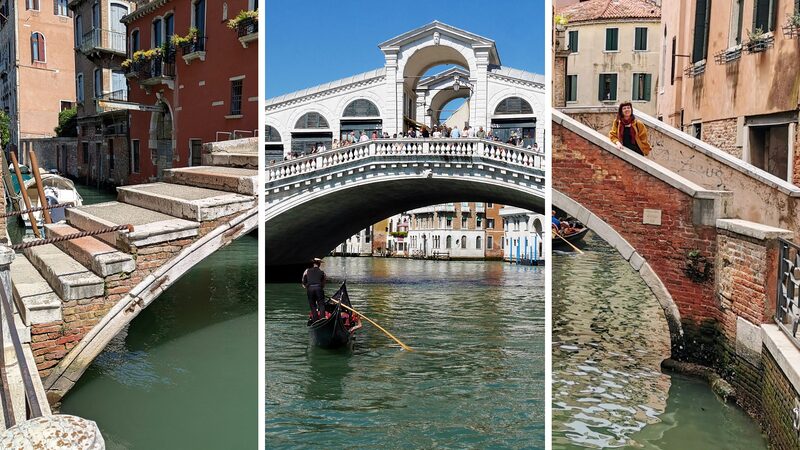
When you think of Venice's canals, bridges are an inseparable part of the image: arched crossings that define how the city is experienced on foot.
The city has around 400 bridges, and over time you may start to wonder which ones are truly worth seeking out.
We highlight 23 bridges that stand out for their history, design, or views. To make them easier to explore, we've grouped them into 6 themes, although many could comfortably fit into more than one.
- Iconic bridges ›
- Bridges of rivalries ›
- Bridges without railings ›
- Bridges with a view ›
- Architecturally distinct bridges ›
- Bridges with a story ›
Iconic bridges
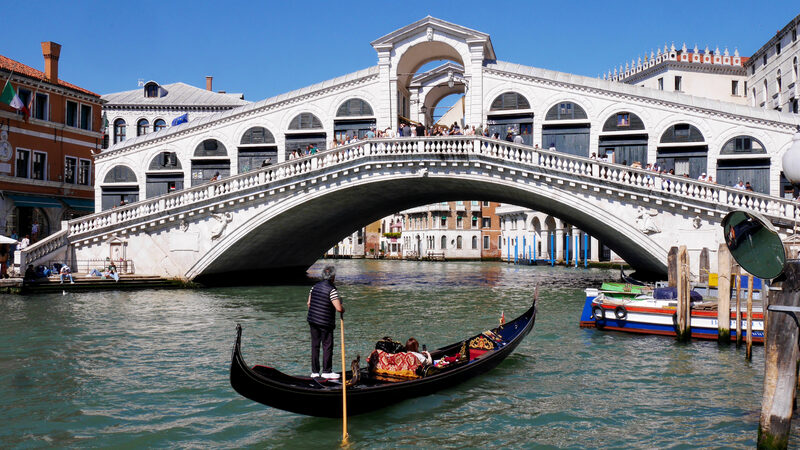
No guide to Venice bridges would be complete without familiar names like the Rialto Bridge and the Bridge of Sighs.
These are true must-sees, so rather than repeating them here, we've dedicated a separate section to each, with their history, highlights, and practical tips for your visit:
Bridges of rivalries
For nearly four centuries, Venice's two great rival factions, the Castellani and the Nicolotti, settled their disputes on a pair of so-called 'bridges of fists'.
These ritualized contests were fought with bare hands, as fists were the only form of combat officially allowed, drawing large crowds who gathered along the canals to watch.

The battles began with fighters taking position at the bridge's four corners, marked by stone footprints that can still be seen today.
Once the signal to start the fight was given, the opposing sides surged forward, trying to push their rivals from the bridge. With no railings in place, many contestants ended up in the canal below.
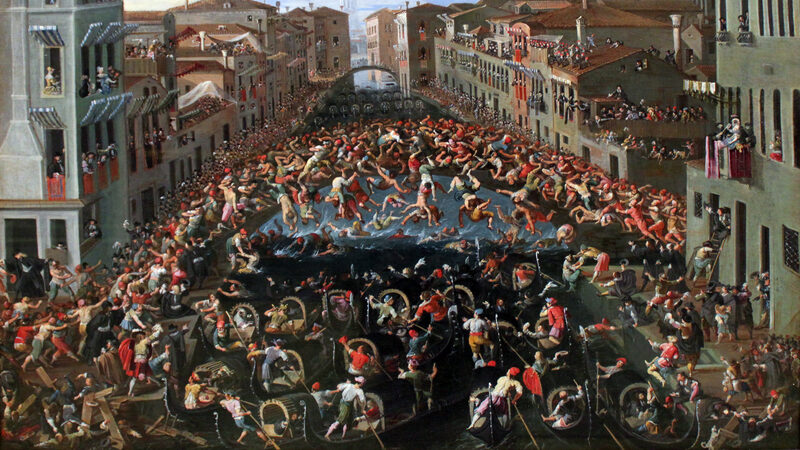
The tradition came to an end in 1705 after a particularly violent clash spiraled out of control.
Yet you can still stand on the original footprints at Ponte dei Pugni, Venice's most famous bridge of fists, or at its sister bridge, Ponte Santa Fosca in Cannaregio.
Bridges without railings
Originally, most of Venice's bridges had no side railings, making it easier to access the water and load or unload goods directly from boats.
In the 19th century, for safety reasons, parapets and railings were gradually added to almost all of them.
Only two exceptions remain today, and crossing them still gives a striking sense of openness and exposure to the waters below.
Ponte Chiodo
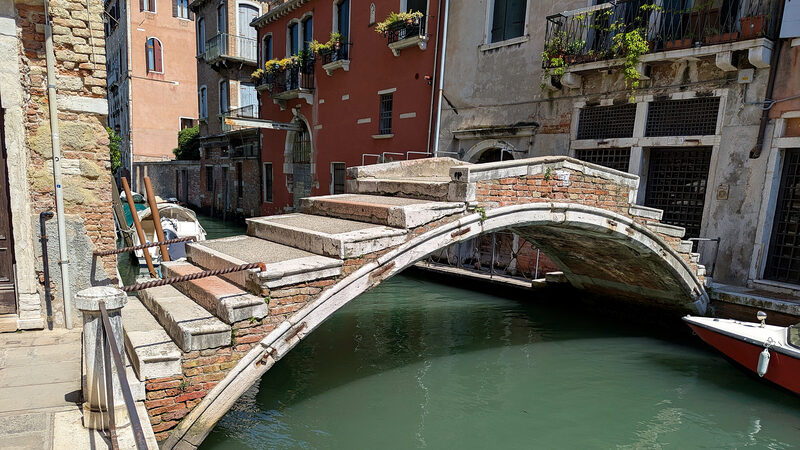
Ponte Chiodo in Cannaregio is an example of private bridge in Venice: a bridge that connects directly to the entrance of a house, in this case the patrician residence of the Chiodo family.
Their house is a good example of a typical Venetian arrangement with two entrances side by side: one connecting to the land via a private bridge, the other opening directly onto the canal for arrivals by boat.
The bridge has become increasingly popular in recent years, so it's best visited early in the day to avoid waiting behind people taking photos.
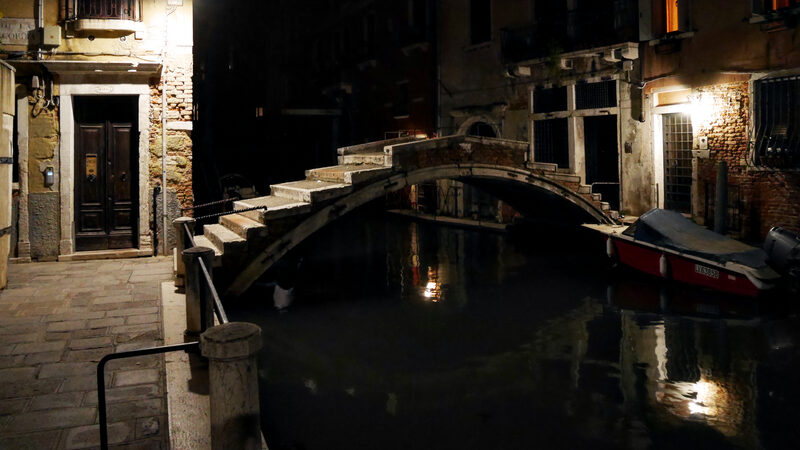
An evening visit can be particularly atmospheric, if you can set aside the unsettling thought of slipping into the dark waters below.
Ponte del diavolo
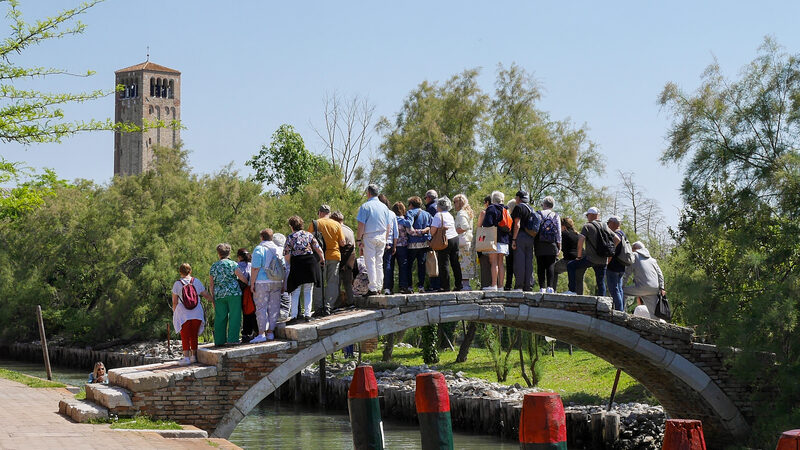
Dating back to around the 15th century, this bridge on the island of Torcello takes its name most likely from a local legend involving a pact a young girl in love is said to have made with the devil.
Today, it's an easy crossing to try on your way to the Basilica of Santa Maria Assunta, along the main path from the vaporetto stop.
Unlike Ponte Chiodo, the so-called Devil's Bridge sits seemingly in the middle of nowhere, surrounded by greenery. But Torcello was not always this quiet: the island was once just as populated and lively as Venice itself.
Bridges with a view
Because of their size, position, and surroundings, a handful of bridges in Venice can easily qualify as viewpoints.
Naturally, some of the best views are found on the bridges spanning the Grand Canal, where the city's main waterway unfolds in both directions in a constantly changing parade of boats.
Views of the Grand Canal
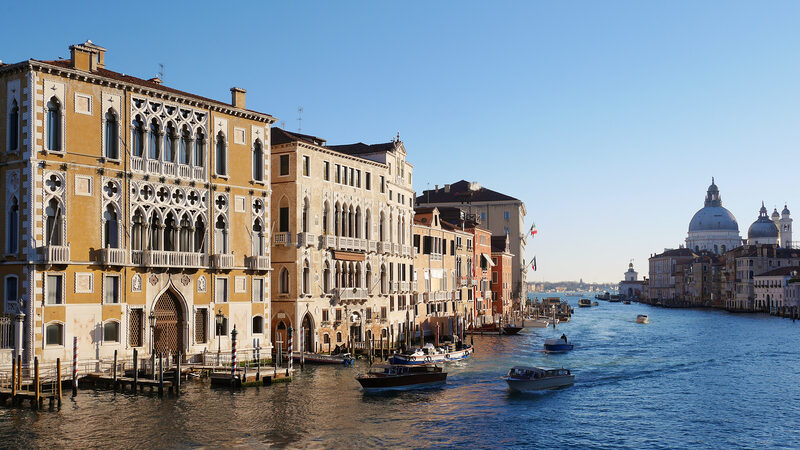
Of the four bridges crossing the Grand Canal, the Accademia Bridge offers what is arguably one of Venice's most emblematic panoramas, while the Rialto Bridge remains one of the city's classic viewpoints.
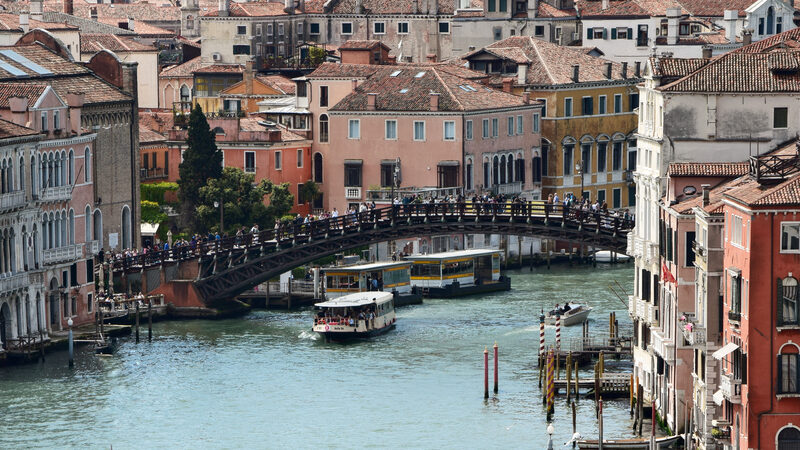
This next view is from the third bridge built across the Grand Canal, Ponte degli Scalzi - and for many visitors arriving by train, it is the first bridge they cross.
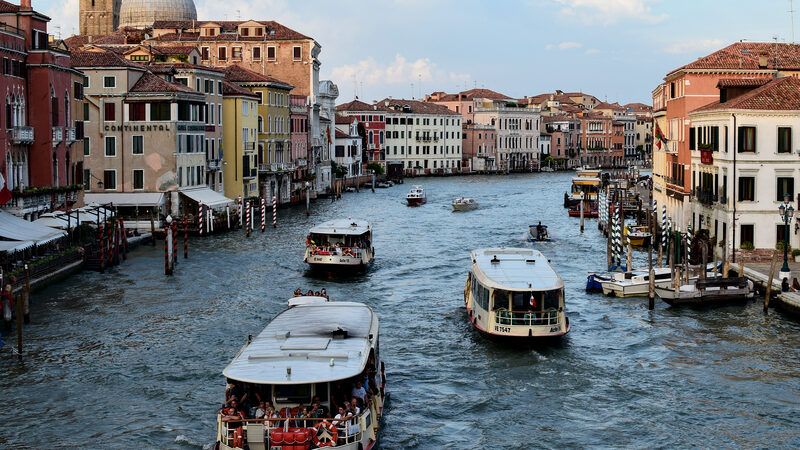
Some will rejoice at the views from the top, while others will already be regretting bringing large luggage that must be carried up the bridge's many steps.
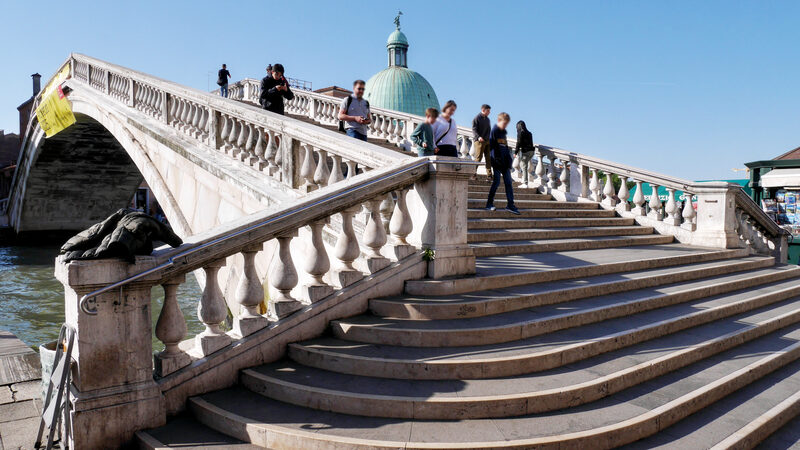
Although completed relatively recently (1934), it follows a traditional design and construction method, with a single arch spanning the water and a structure built almost entirely from white Istrian stone.
The bittersweet final view of Venice

Bridge of Sighs, the only enclosed bridge in Venice, links the Doge's Palace with the prisons and it was through its narrow windows that convicts caught their final glimpse of the city on their way to their cells.
This moment of resignation is said to have inspired the bridge's name.
Today, you can still retrace that passage as part of a visit to the Doge's Palace - and afterwards, perhaps celebrate your freedom with a good gelato.
Riva degli Schiavoni features a succession of wide bridges, among the few in Venice with ramps. One of them is Ponte della Paglia, located next to the Doge's Palace, where the waterfront begins.
While panoramic views of the San Marco basin can be enjoyed along much of the waterfront, this bridge is especially popular for one reason: it offers one of the two best views of the Bridge of Sighs.

The other external view is from Ponte della Canonica, where you can see the Bridge of Sighs framed against the lagoon.
Views of the Arsenal
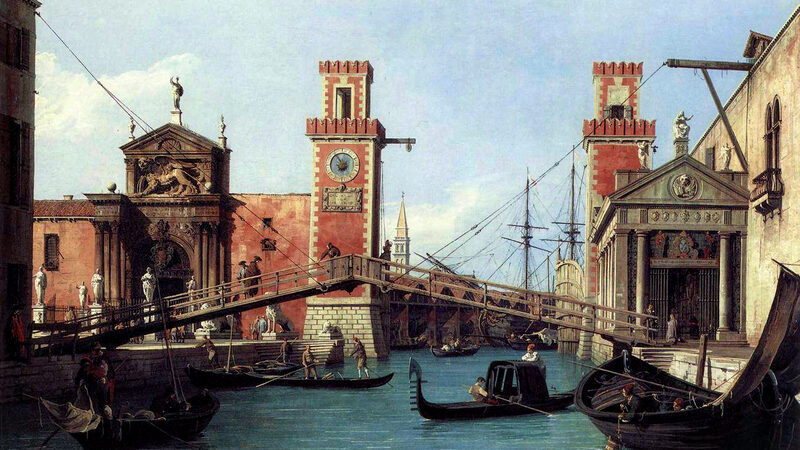
This painting by Canaletto from 1732 shows the original drawbridge at the entrance of the Venetian Arsenal known as Ponte dell'Arsenale (or Ponte del Paradiso).
Given the size of the galleys built inside the Arsenal and the height of their masts, a drawbridge was a practical necessity.
Today, you can cross a wooden replica inspired by the original, which offers from its top a peek inside the Arsenal.
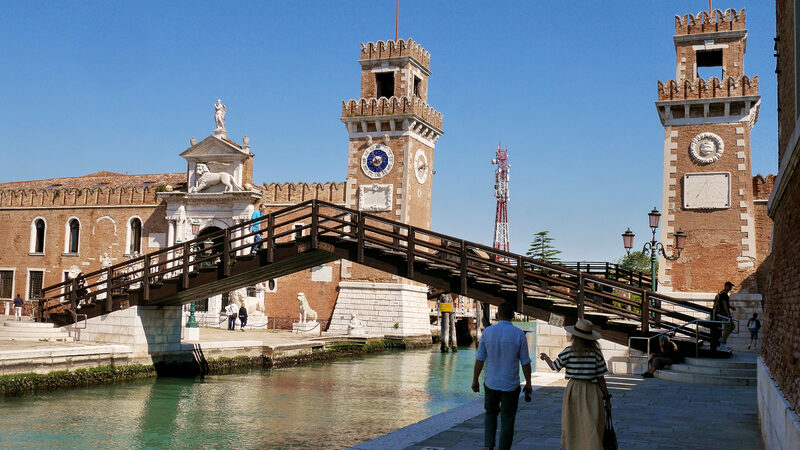
Just imagine the newly built ships that once emerged through its gates, when this was the industrial powerhouse of Venice and the source of its maritime strength.
Even today, the Arsenal remains an active military site.
Views of the Campanile
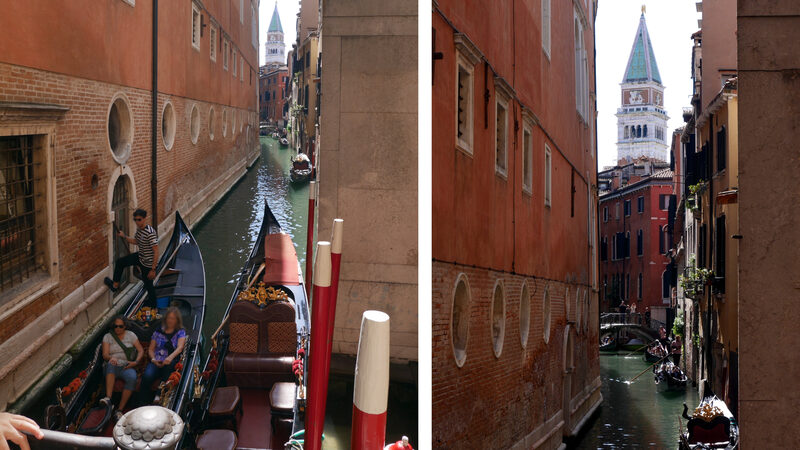
From Ponte del Lovo, you get a unique photo opportunity where two of the city's symbols come together in a single frame in a way you won't find elsewhere in Venice: a typical narrow canal of the San Marco area with gondolas quietly floating through it, and, in the background, the mighty St Mark's Campanile.
Because the bridge lies on the main route between Rialto and St. Mark's Square, expect crowds of people stopping for photos, so it is best visited early in the morning.
Colorful views
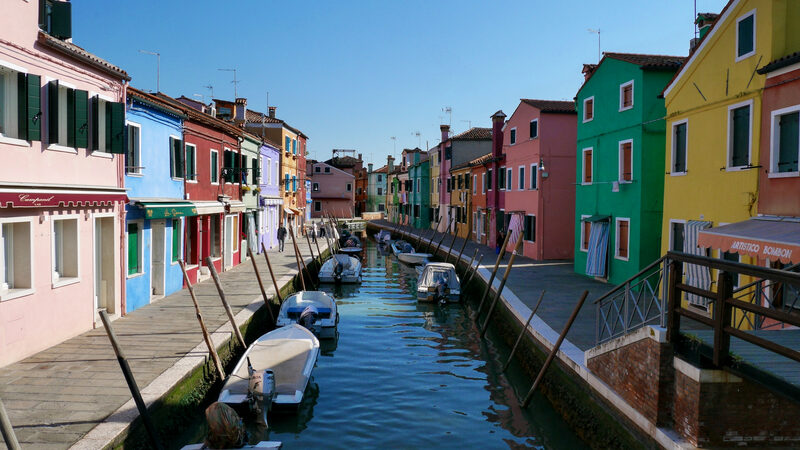
Tre Ponti in Burano is a wooden footbridge that branches in three directions over two intersecting canals, offering 360-degree views of Burano's brightly painted houses, from above the water.
The bridge is relatively close to Burano's vaporetto stop, making it an easy detour on your way to the center of the island.
Architecturally distinct bridges
Let's now look at bridges that stand out for their architectural design, each with a distinctive approach to form and construction.
The bridge with three arches
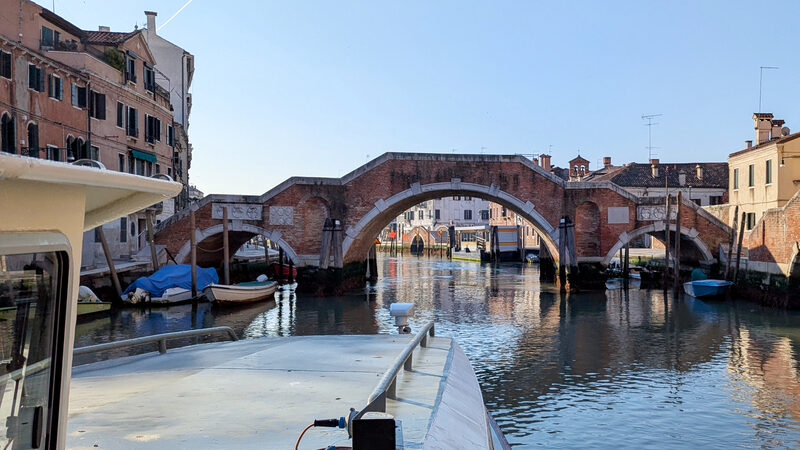
Ponte dei Tre Archi is the only surviving bridge in Venice with three arches, a design that was once common, but later replaced by the more navigation-friendly single-arch form.
With six flights of stairs and a wider span than most, it crosses the Cannaregio Canal and is one of the few Venetian bridges, not located on the Grand Canal, from which you can watch the relatively large vaporetti squeeze through its central arch.
The bridge of spires
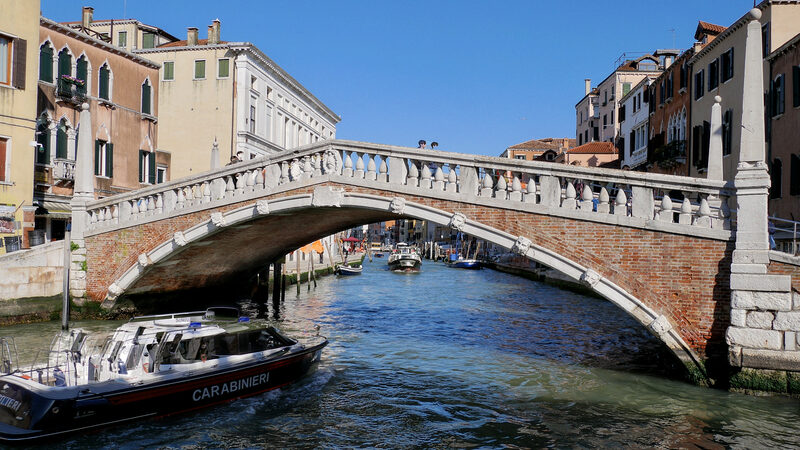
Nearby, Ponte delle Guglie is the other bridge over the Cannaregio Canal, and it can be even more challenging for large boats passing underneath, which often sound their horns as they navigate the narrow space with limited visibility from either direction.
The bridge is unique for its four spires at the ends of the balustrades, while twenty different gargoyle faces decorate its arch.
It also features a ramp, as it sits along the main pedestrian route from Venice Train Station to Rialto: the Strada Nova.
The flat bridge
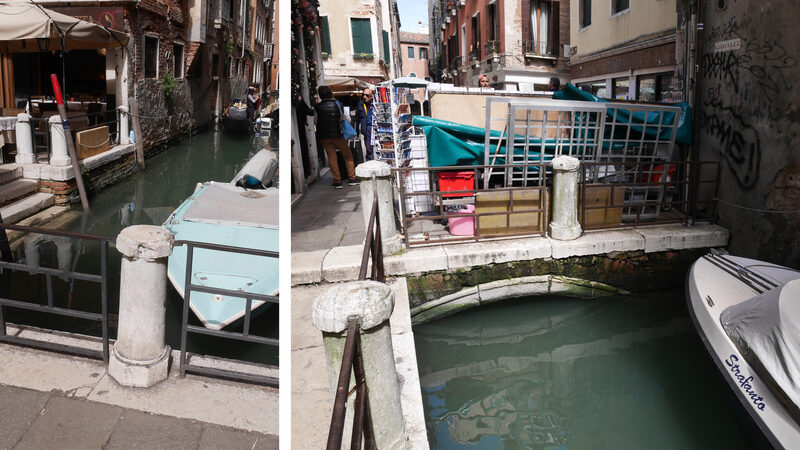
Ponte dei Meloni is so flat that you may not even notice it.
Arriving here, you might think you are simply walking along the pavement of a normal calle: there are no steps to climb, and the modest parapets are often hidden by market stalls.
The water flows just beneath, leaving only a few centimeters of space beneath the bridge, which on days with high tide can almost disappear.
Modern bridges
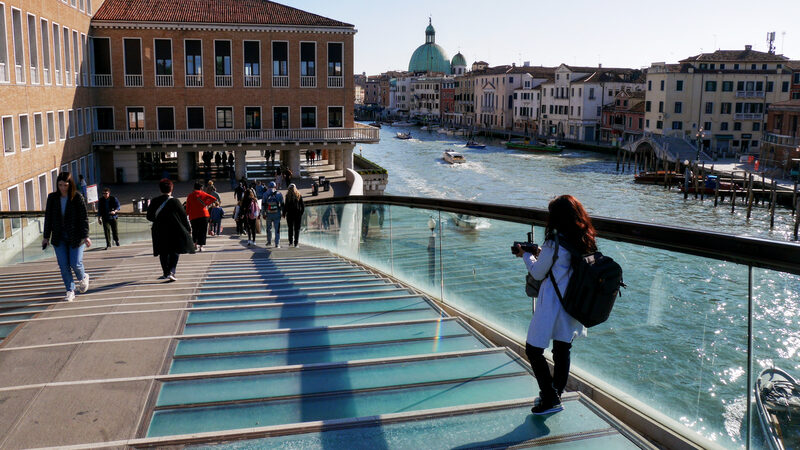
Ponte della Costituzione, the 4th and last bridge over the Grand Canal, is distinctive for its modern design and its use of tempered glass in the steps and parapet, a first for Venice.
It is its contemporary style that has also drawn strong criticism, mainly due to the lack of a ramp for wheelchair access or luggage, the slipperiness of the glass surface, and its minimalist aesthetic, which is often seen as incompatible with Venice's traditional architecture.
Ponte della Costituzione was inaugurated in 2008 and connects Piazzale Roma, the main gateway for road traffic entering and leaving Venice, with Venice Train Station.
While you might be tempted to think it is the newest bridge in Venice, that distinction belongs to a nearby crossing: Ponte Valeria Solesin, inaugurated in 2017 and named after a young Venetian researcher who lost her life in the terrorist attack at the Bataclan in Paris in 2015.
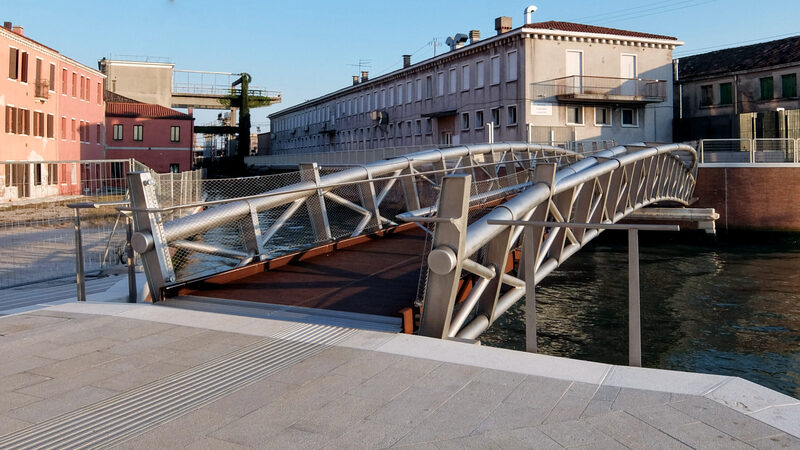
It replaced an older bridge that connected the former slaughterhouse to the railway station, a route once crossed by countless cattle on their final journey.
Ponte … Tre Ponti (or 4?)
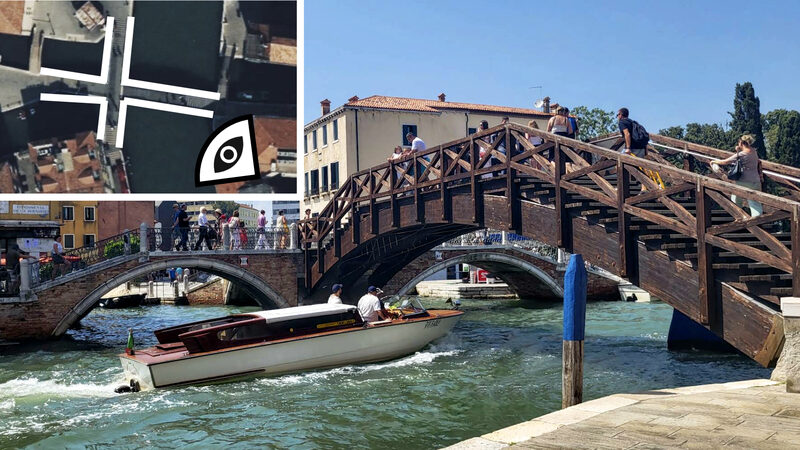
As its name suggests, Ponte dei Tre Ponti is not a single bridge but a junction of three bridges meeting at a central platform. A fourth branch extends from it, creating a cross-shaped layout when seen from above.
Confusing? The explanation lies in its history: the name dates back to the original structure of three bridges, and when the Rio Novo canal was excavated in 1933, a fourth branch was added, while the historic name remained.
A crooked bridge
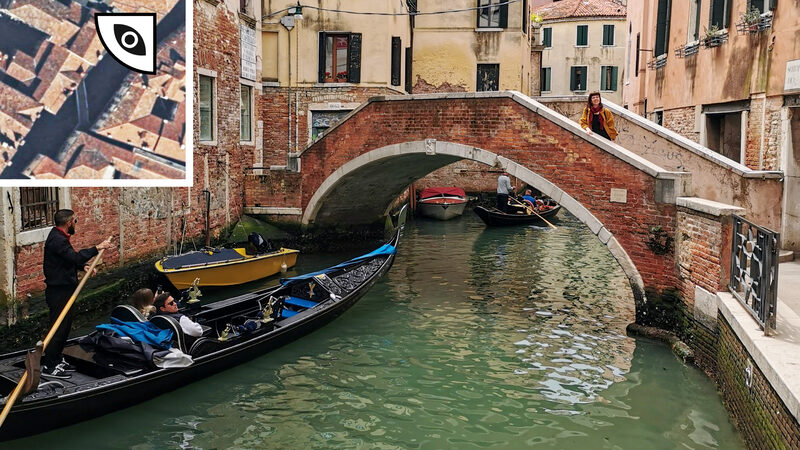
While you might expect a bridge to meet the canal banks at a right angle, this is not always possible in Venice's dense urban fabric, and some bridges are built on an oblique alignment, resulting in a so-called 'ponte storto'.
A clear example is Ponte Marco Polo, located next to the historic house of the famous Venetian explorer.
An iron bridge
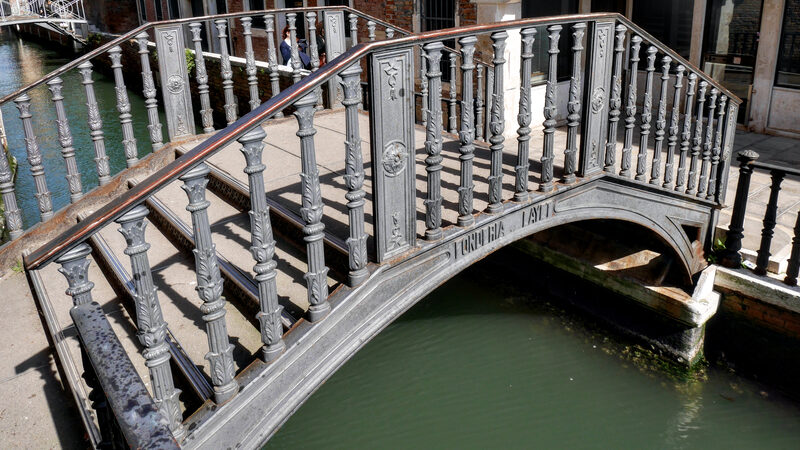
Ponte della Donna Onesta ('the bridge of the honest woman') is an evocative name that immediately suggests a range of legends.
The bridge is entirely made of cast iron, a rare sight in the city, as many similar iron bridges were later replaced due to corrosion.
You may cross it on your way between the Frari Basilica and San Barnaba, so it's worth making a small detour to include it in your walk.
Bridges with a story
Most bridges in Venice are surrounded by legends, with some even rooted in historical fact.
The bridges in this section are not visually distinctive, but their meaning and symbolism reveal a deeper layer of the city.
They are best appreciated when you know their stories - otherwise, you might simply walk past them without noticing.
Hooks of public punishment
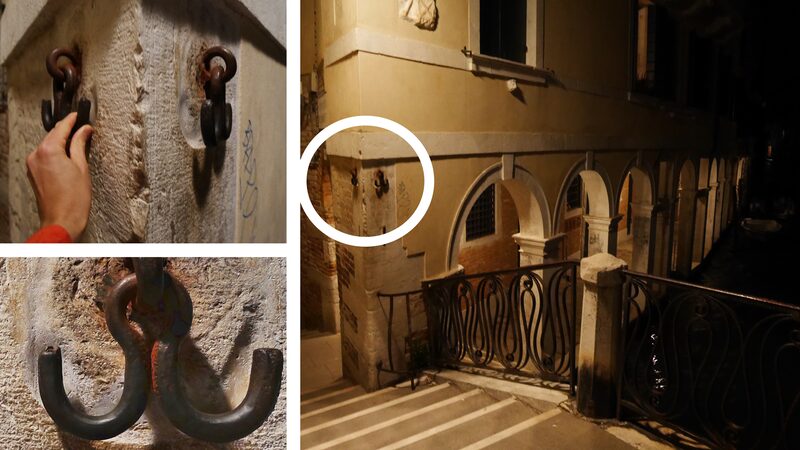
Ponte San Canzian (also known as Ponte San Canciano) is best known for its pair of iron hooks resembling anchors, known as the 'ancorette'.
Their purpose was far less cheerful than their appearance suggests: they were used to display the remains of executed criminals as a public warning.
The body was cut into four parts, with each quarter hung from a hook facing one of the cardinal directions, sending a stark message to those entering Venice.
Ironically, touching the ancorette is now said to bring good luck: a sign that, unlike those once displayed here, you are still in one piece!
But if the body was divided into four parts, why are there only two hooks here?
The other two, now lost, once stood beside Ponte dei Squartai - literally the 'Bridge of the Quartered' - whose name leaves little doubt about its former role.
The executed person's head was displayed separately in St. Mark's Square, on a column of red porphyry at the southern corner of St. Mark's Basilica.
Known as the 'Bridge of the Breasts'
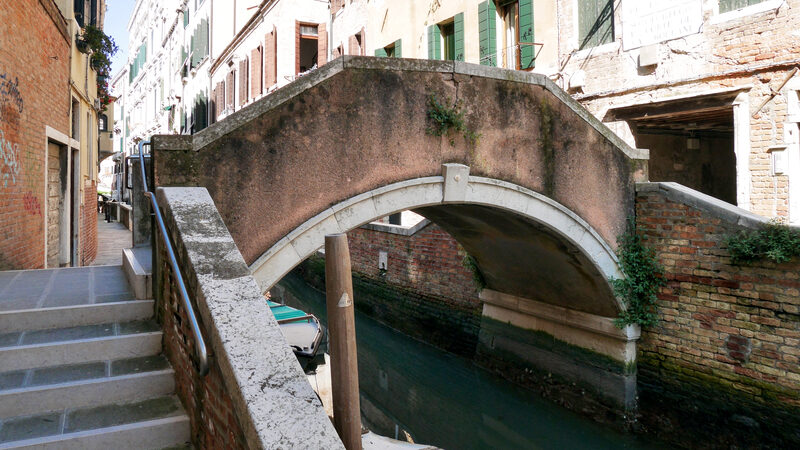
The area around Ponte delle Tette was once part of Venice's regulated red-light district.
Under the Venetian Republic, prostitution was confined to this part of the city, where sex workers were permitted to display themselves from nearby windows and balconies - and even from the bridge itself.
Today, you can still wander through the maze of narrow calli in the former red-light district (known as the Carampane). If you thought the streets around San Marco were narrow, these passages are even tighter, yet far quieter thanks to the absence of large tourist crowds.
The bridge where a miracle happened
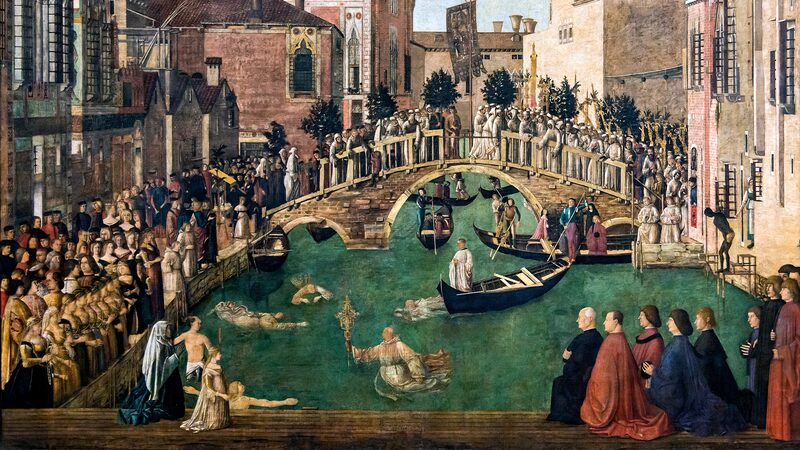
Gentile Bellini's large painting at the Accademia Galleries depicts a miracle said to have occurred in 1370. During a procession, a fragment of the True Cross (the cross on which Jesus Christ was crucified) fell into a canal and is said to have miraculously floated above the water until a chosen man retrieved it.
The bridge associated with this event is Ponte San Lorenzo. The present stone, single-arch bridge is different from the three-arch structure that stood here both at the time of the miracle and when Bellini painted the scene around 1500.
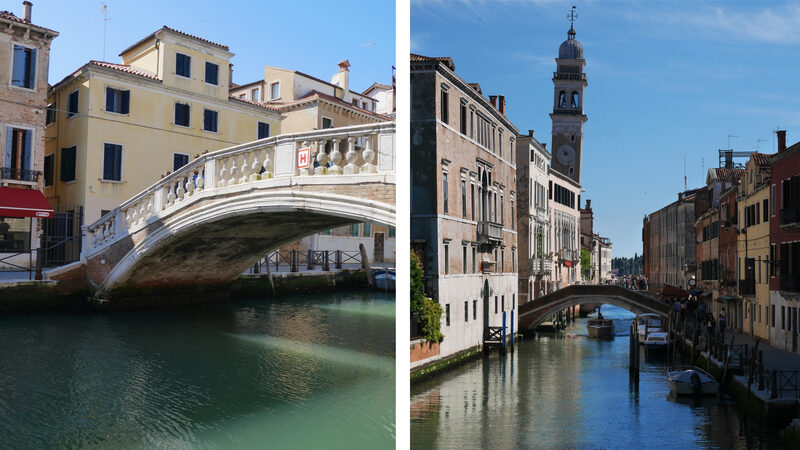
Crossing the bridge and looking south, you get a clear view of just how tilted the bell tower of the church of San Giorgio dei Greci is.
How Venice's bridges evolved
Interestingly, many of the bridges you see today are not as old as the rest of Venice.
The Venetian Republic was a maritime power built around water-based transport, and canals were primarily navigated by boat, meaning the number of bridges was about a quarter of what it is today.
After the fall of the Republic in 1797, particularly under Austrian rule, Venice gradually became more pedestrian-oriented. The administration approached the city through a more land-based urban logic, shaped by how cities were typically understood and managed in Central Europe.
During this period, many canals were progressively filled in or converted into streets, creating the so-called 'rio terà', and a large number of new bridges were built.
It was also at this time that the railway connection to the mainland was constructed: the 3.6 km (2.2 miles) railway bridge linking Venice to the mainland.
It is tempting to imagine how Venice's layout might have evolved in a parallel world where its maritime culture had never faded…
Find your Venice
Tailored picks to match your travel style, mood, or interests.