Beyond the Classics
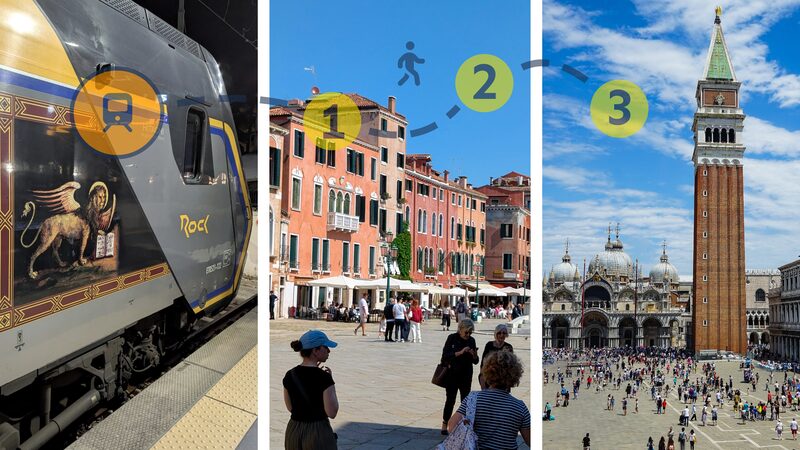
Venice in a day
Two self-guided walks for your first day trip to Venice
For many, Venice is a day trip. But how do you make sure you see Venice's essential sights without spending the whole day following the crowded corridors between them?
We've designed two walks to help you make the most of your time, combining the must-see highlights with quieter corners and memorable views.
The short walk takes you to St. Mark's Square, giving you a rewarding introduction to Venice even if your time is limited.
If you have longer, the extended walk adds more of Venice's remarkable sights before bringing you back to the starting point on a memorable vaporetto ride along the Grand Canal.
But first, let's look at how you'll be arriving in Venice and where your walk begins.
- Arriving in Venice ›
- The Short Walk ›
- Should you take a gondola? ›
- The Extended Walk ›
- Venice Unveiled ›
Arriving in Venice
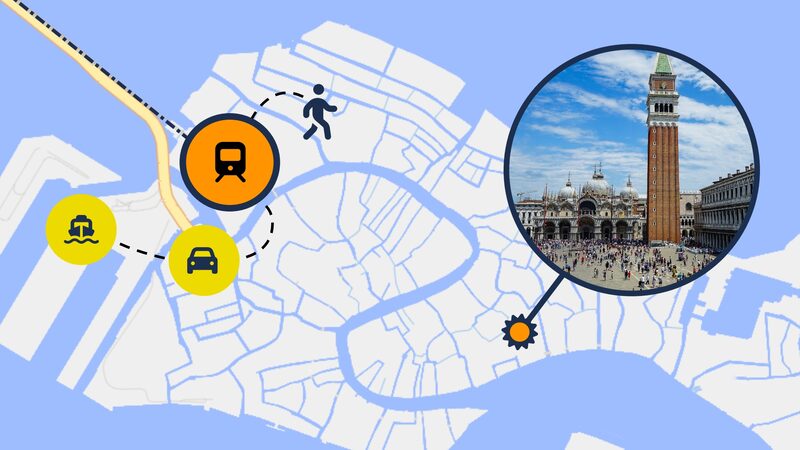
Whether you arrive by train, car, or cruise ship, you'll begin your visit to Venice in roughly the same part of the city.
We'll use the Venice Train Station, Stazione Santa Lucia (marked in orange on the map below), as our starting point for all the itineraries.
Arriving by train
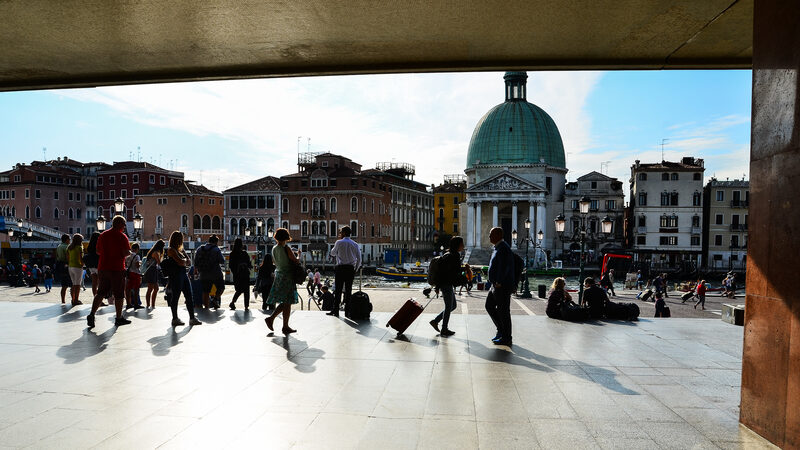
Santa Lucia station is perhaps the city's most atmospheric arrival.
Exit through the main entrance and Venice immediately unfolds before you: the Grand Canal lined with palaces, bridges and passing vaporetti, is your very first view of the city.
Arriving by car
If you're arriving by car, Piazzale Roma is the furthest point you can reach by road.
From here, Venice becomes a pedestrian city: leave your car at one of the nearby parking garages and continue on foot (or by vaporetto).
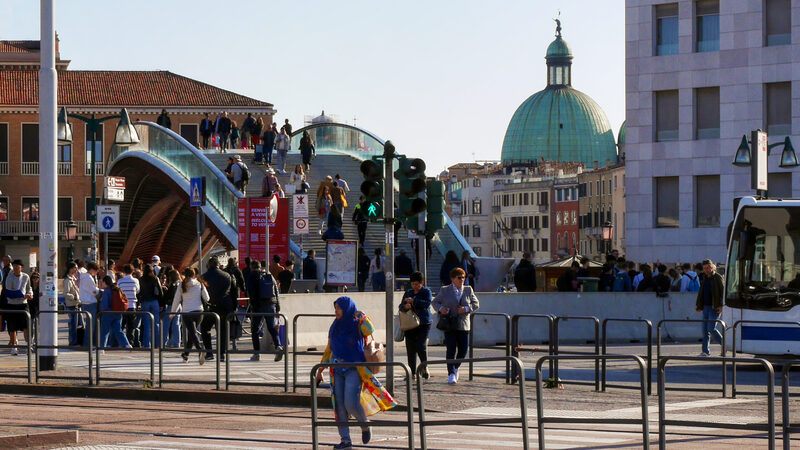
Santa Lucia station is only a few minutes' walk away, reached by crossing the modern glass Ponte della Costituzione.
Arriving by bus or tram
Buses from Venice's airports, as well as regional buses and trams from the mainland, also terminate at Piazzale Roma.

From here, cross the same modern glass bridge to reach the Santa Lucia station.
Arriving by cruise ship
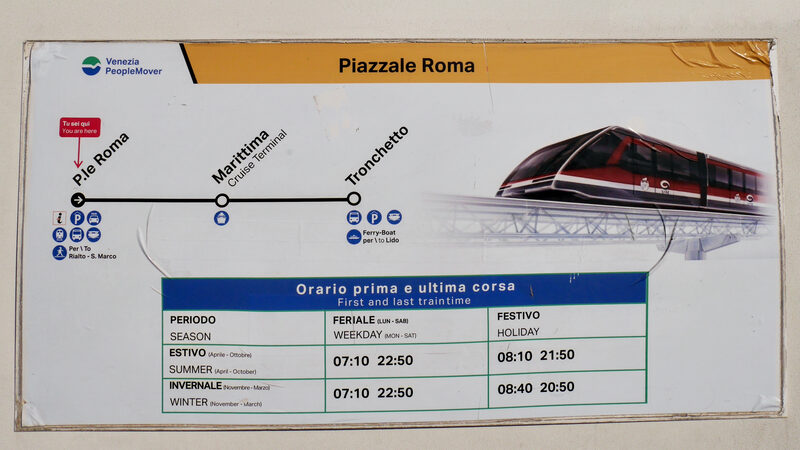
If you arrive by cruise ship at the Venice Cruise Terminal, you can take the driverless People Mover for a few minutes to Piazzale Roma, from where you can continue on foot.
One final thing to note
If you are visiting Venice as a day trip and are not staying overnight in the municipality of Venice (which also includes Mestre and Marghera), you may need to pay the Venice Access Fee.
Check whether it applies to your visit, as the fee is required only on selected days during the busiest periods and must be paid online before your arrival.
And now, with the practicalities out of the way, let's start with the first of the two walks.
The Short Walk
This walk is designed for visitors who only have a few hours in Venice but still want to experience its essential sights and atmosphere.
It is primarily an outdoor walk, with opportunities to quickly step inside churches and other places with free admission whenever something catches your eye.
At a normal walking pace, the walk takes about 2 hours without stops, including the return leg.
But you're not doing a marathon here: allow 3–4 hours for a more realistic pace, with time to stop and enjoy the sights.
Route map and highlights
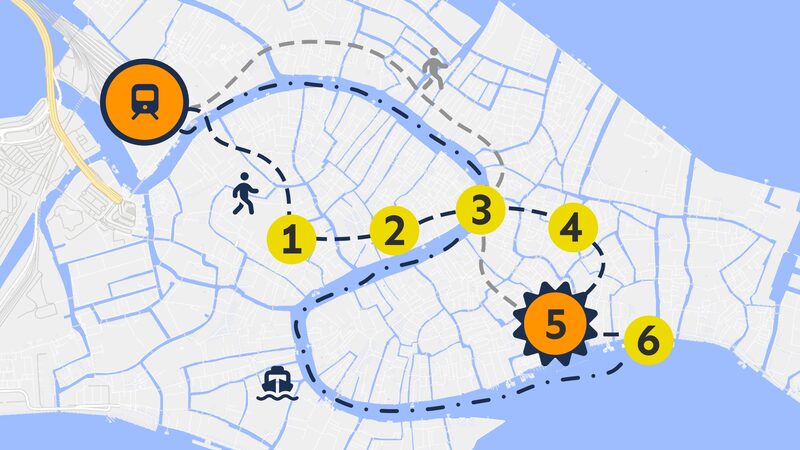
(1) Frari Basilica (2) Riva del Vin (3) Rialto Bridge (4) Campo Santa Maria Formosa (5) St. Mark's Square (6) Riva degli Schiavoni If you'd like to skip about 2 km (1.25 miles) of walking and head straight to the Rialto Bridge (3), take vaporetto line 1 (or line 2) from the Ferrovia stop at the train station to the Rialto stop. The journey takes about 20 minutes, compared with around an hour on foot, not including any stops.
Let's avoid the busiest route
To reach St. Mark's Square, many first-time visitors follow the signposted path north of the Grand Canal, through Strada Nova (the grey walking path shown on the map).
Although this is the most direct route, it is often congested and has become one of Venice's busiest tourist corridors, lined mostly with souvenir shops and tourist-oriented eateries.
Instead, we recommend crossing the Grand Canal at Ponte degli Scalzi right after leaving the station.
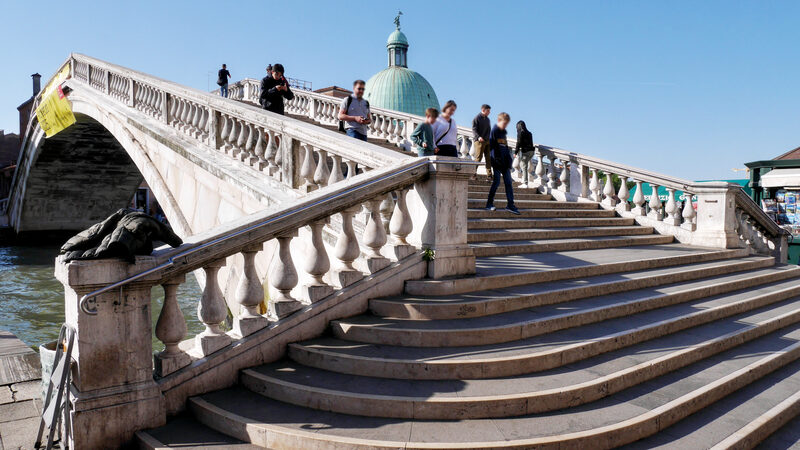
Although completed relatively recently (1934), the bridge follows traditional Venetian design principles, with a single arch spanning the water and a structure built almost entirely from white Istrian stone.
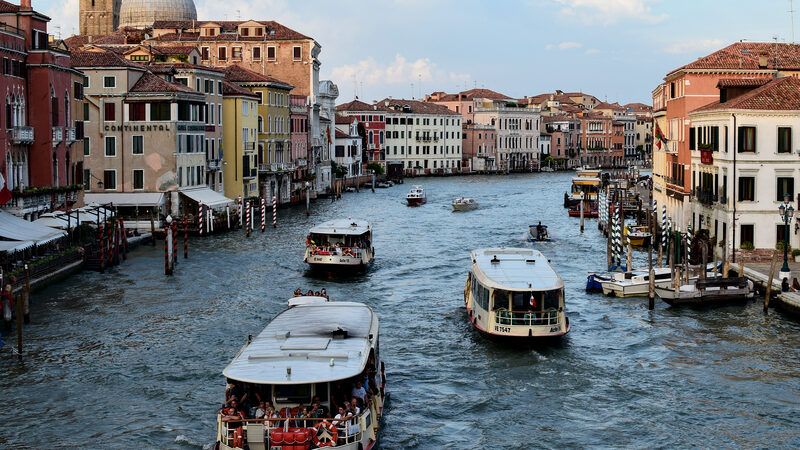
Pause for a moment here: the bridge offers a beautiful first elevated view of the Grand Canal, with palaces lining the water and boats passing beneath you: the perfect first glimpse of Venice and a photo worth taking.
But another side of Venice begins as you leave the waterfront behind and step into the city's maze of narrow alleys (calle).
Entering Venice's labyrinth
Perhaps unexpectedly, the Grand Canal is not designed as a riverside promenade like many waterways in European cities.
Instead, the way to Rialto Bridge (stop 3 on the map) leads you into Venice's network of narrow calli and small bridges weaving between countless side canals.
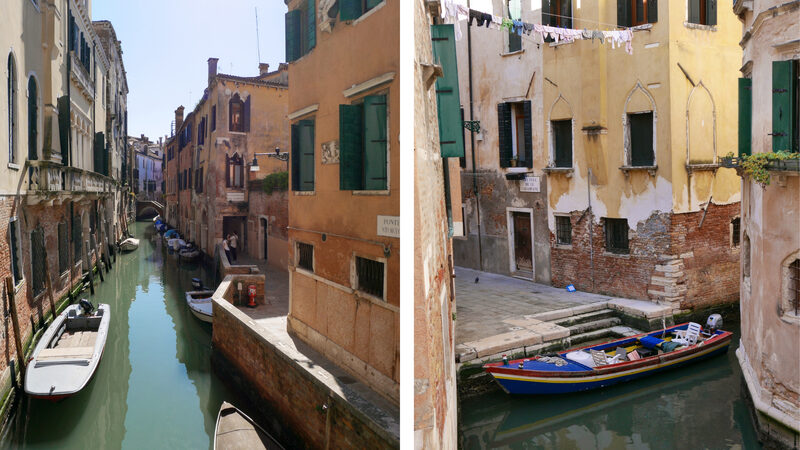
Don't worry about taking a wrong turn: getting a little lost in Venice's maze is part of the experience and often the best way to discover unexpected corners.
(1) First stop: A Gothic giant
And then, almost unexpectedly, the massive brick facade of the Frari Basilica emerges from the maze of streets: sometimes appearing first as a reflection in the canal water.
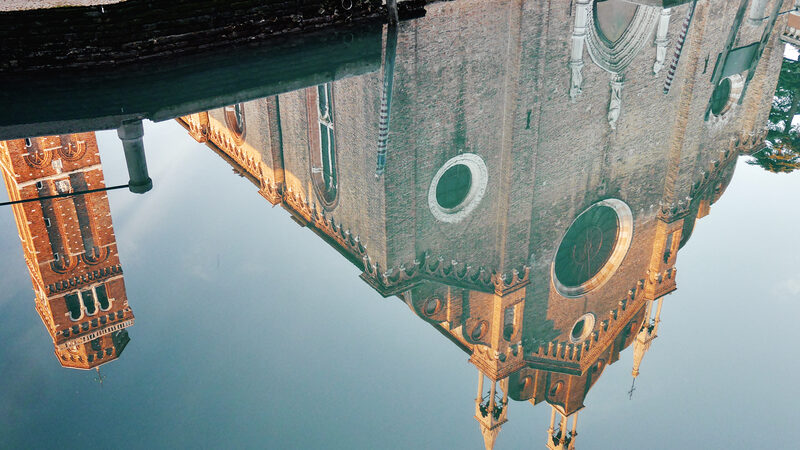
This is not a mirage. Even in a city of narrow streets and small bridges, all built on wooden piles driven into the lagoon soil, Venice hides some surprisingly monumental spaces.
The Frari Basilica and Santi Giovanni e Paolo are the city's two Gothic giants, their vast interiors offering a dramatic contrast to the cramped calli you have just explored.
Step inside for a refreshing change of scale and an impressive collection of art treasures .
(2) Approaching Rialto
Leaving the Frari behind, the walk continues towards Rialto Bridge, passing through Campo San Polo.
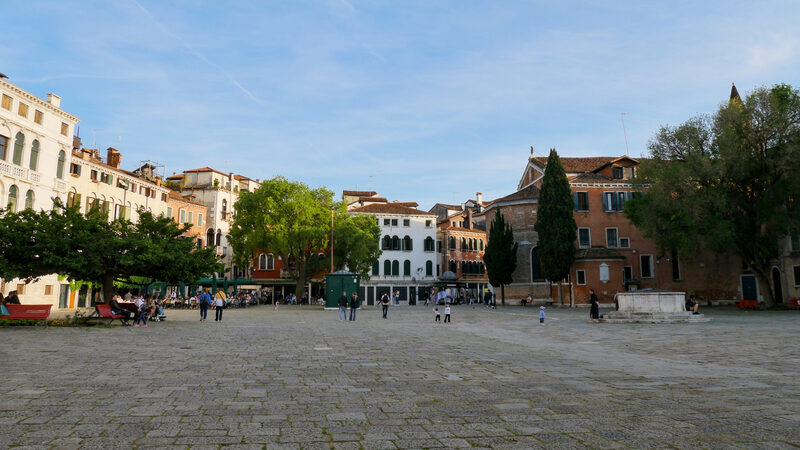
A campo is Venice's version of a town square: an open space where the city slows down and everyday life unfolds.
You'll find people chatting, children playing, friends catching up over a spritz, and cafés spilling onto the square in the warmer months.
Campo San Polo is the largest of Venice's many campi, and the city's second-largest public square after St. Mark's Square.
It's a wonderful place to pause for a drink and watch the rhythm of Venetian life before continuing towards Rialto Bridge.
Before leaving, take a moment to step inside the church of San Polo. Admission to the church is free, and the first thing you'll notice is its unusual wooden ceiling shaped like an upturned ship's hull: a tribute to Venice's shipbuilding tradition.
For a small additional fee, don't miss the church's hidden gem: the Oratory of the Crucifix. Its remarkable 18th-century Stations of the Cross cycle reimagines the Passion of Christ through the lens of Venetian society of the time: elegantly dressed noblewomen, turbaned Ottoman merchants and even curious children appear alongside the biblical figures.

From here, cross the unusually flat Ponte del Meloni and continue through Campo San Silvestro until you reach the southern end of Riva del Vin.
This is one of the few places where you can walk alongside the Grand Canal, and it rewards you with one of the city's finest views of the Rialto Bridge as boats glide beneath its arch.
(3) Venice's most iconic bridge
You're finally here! Before your eyes stands one of Venice's greatest icons.
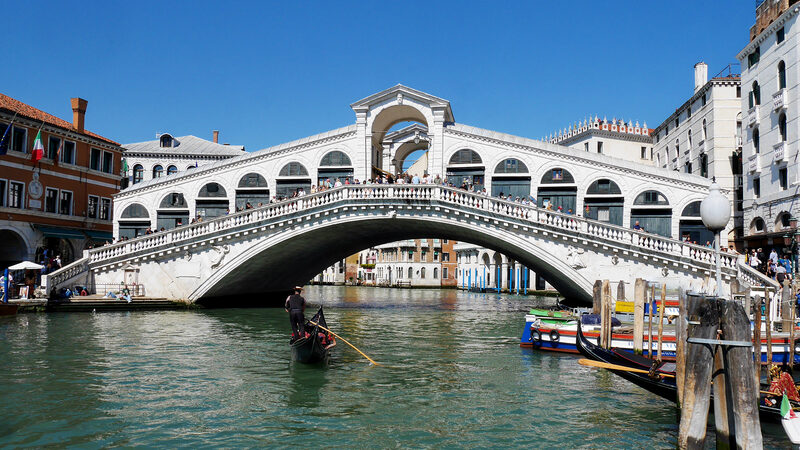
The Rialto Bridge is the oldest bridge spanning the Grand Canal. Completed in 1591, its bold single-span stone arch was an extraordinary engineering achievement for its time.
Beneath your feet, around 12,000 elm piles driven deep into the lagoon floor support the bridge, anchoring its immense weight in the soft mud beneath Venice.
For centuries, the Rialto Bridge has been a meeting point for Venetians, merchants arriving from distant lands in search of trade, and countless visitors from all walks of life.
Today, you can walk the same crossing and enjoy the views that have inspired generations before you.
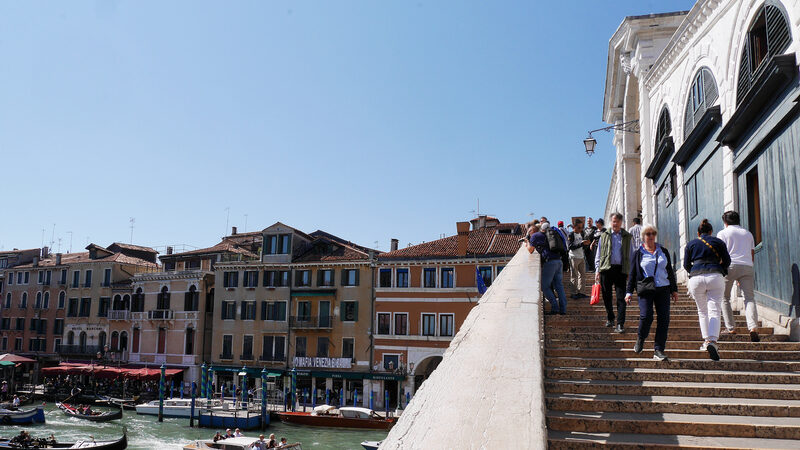
By the way, Rialto looks impressive from every angle, so take some time to admire it from different perspectives.
(4) A better way to reach St. Mark's Square
From Rialto Bridge, most visitors follow the direct route towards St. Mark's Square.
We recommend a small detour instead: you'll escape the busiest streets while discovering another beautiful Venetian square: Campo Santa Maria Formosa.
This laid-back square is lined with inviting cafés and framed by elegant historic buildings.

The namesake church, Santa Maria Formosa, is also worth a quick look: it combines two contrasting facades, Renaissance on one side and Baroque on the other.
Above the small door at the base of the bell tower, look for a curious mascaron (a grotesque carved head) said to keep the devil from entering the campanile and ringing the bells out of spite.
Admission is free, and inside you'll find a highlight of the church's collection: a six-panel altarpiece centred on Saint Barbara.
If you find yourself with extra time, one our favourite place to enter nearby is the surreal Palazzo Grimani.

After enjoying the square, make your way to Ponte de Canonica for a more unusual view of the Bridge of Sighs.
While most visitors gather on the other side (which you'll reach too at step 6), this alternative viewpoint reveals the Bridge of Sighs in its full setting: linking the Doge's Palace with the former prison against the backdrop of the shimmering lagoon.

From the bridge, you're only a few steps away from one of the defining highlights of any first visit to Venice.
(5) St. Mark's Square
No visitor is ever quite prepared for the spectacle of this unique place.
And it's no wonder it earned the nickname 'the world's most beautiful drawing room'. Like the elegant reception room of a grand house where guests gather, this was Venice's great stage for social life. Its refined proportions, grand historic arcades, and extraordinary architecture have made it one of the world's most celebrated public spaces.
If you've followed our suggested detour (4), you'll enter the square from the east, through Piazzetta dei Leoncini, the narrow space between St. Mark's Basilica and the Clock Tower.
Pass between the two red marble lions, and after the narrow streets behind you, the vast expanse of St. Mark's Square suddenly opens before you.
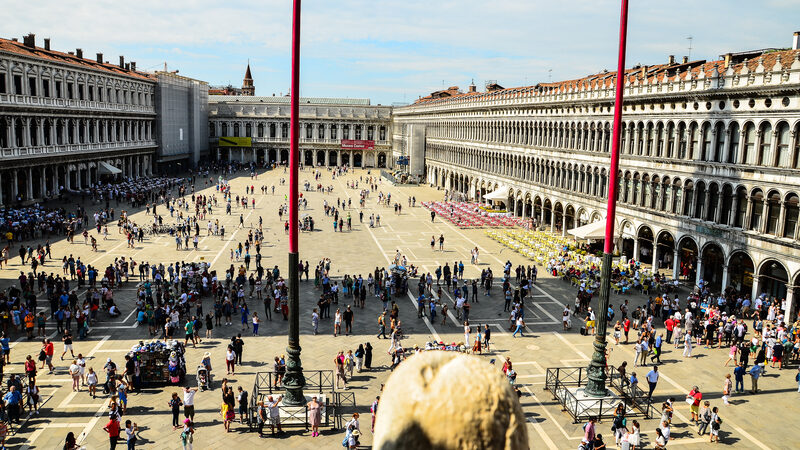
The square is almost always filled with people, but as you walk towards its centre, you quickly notice that, unlike many famous squares around the world, there is no traffic noise competing with the atmosphere: only the sounds of footsteps, conversations, and the occasional music drifting from the cafés.
Around you, the orderly facades of the square create a harmonious rhythm of arcades, preparing the eye for a dramatic contrast.
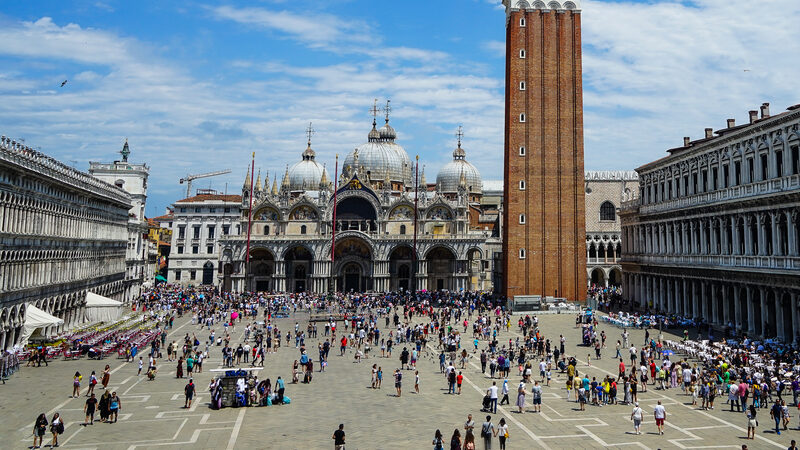
Turn around, and the Basilica breaks this rhythm completely: five grand arched doorways, glittering gold mosaics, and a rich collection of sculptures create a visual spectacle unlike anything else in Venice.
Then look towards the adjacent Piazzetta San Marco, where the square opens onto the lagoon.
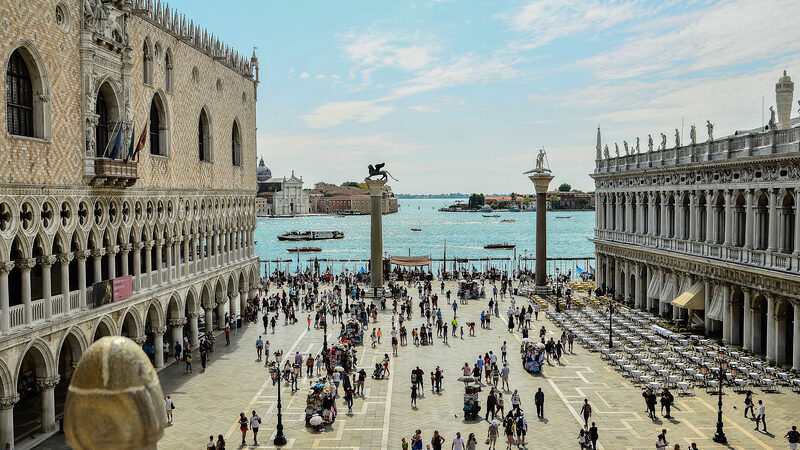
Here, another architectural language takes over: the Venetian Gothic style of the Doge's Palace, with its delicate pink-and-white marble patterns, intricate details, and elegant open loggias.
St. Mark's Square is a destination in itself, with some of Venice's most iconic sights gathered in one place. We cover its highlights, the best times to visit, and practical tips in our dedicated guide to the square.
(6) A memorable way back
By now, you may be ready to give your feet a little break after hours of wandering through Venice. This is the moment to slow down and experience the city from another perspective.
A vaporetto ride along the Grand Canal makes for a memorable finale to your first glimpse of Venice.
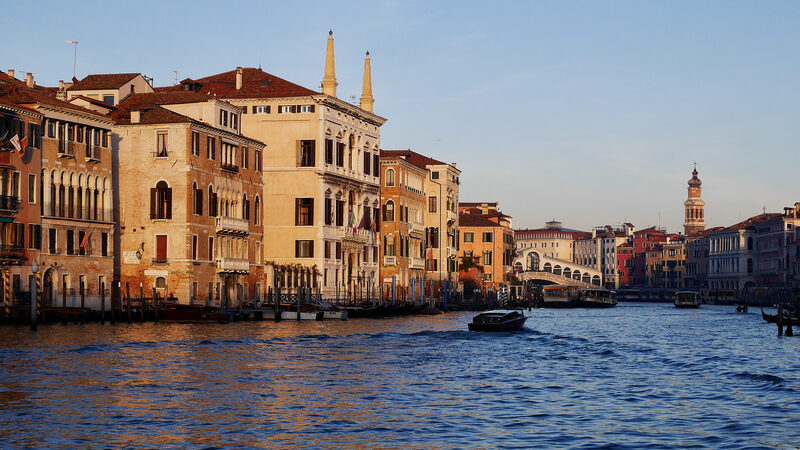
We suggest boarding at the San Marco-San Zaccaria stop (6 on the map).
The walk there takes you along the entire facade of the Doge's Palace, across Ponte della Paglia with its famous view of the Bridge of Sighs, and along the wide waterfront of the San Marco Basin.
Vaporetto line 1 takes around 45 minutes to reach the train station.
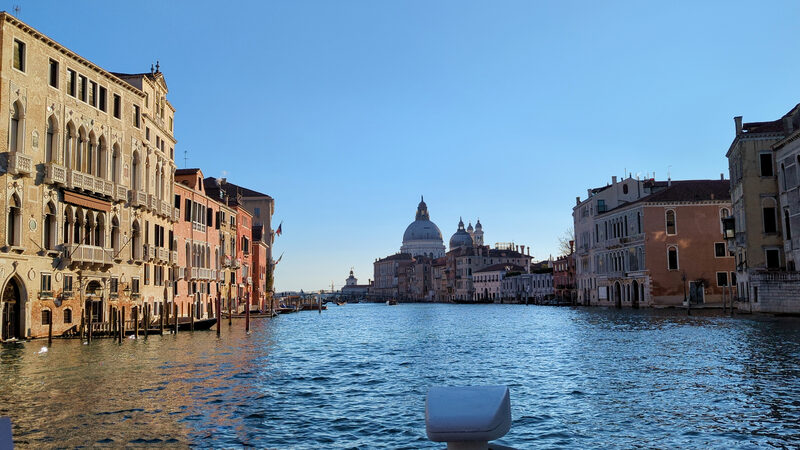
If you still have time, continue a little further along Riva degli Schiavoni and board at the Arsenale stop instead. This gives you a better chance of finding a front seat and enjoying the Grand Canal views from the best position.
Should you take a gondola?
At this stage, you're probably asking: Is a gondola ride worth it on a day trip?
Our short answer: since this is your first time in Venice, we'd prioritize the walks - unless a gondola ride is one of the experiences you've always dreamed of.
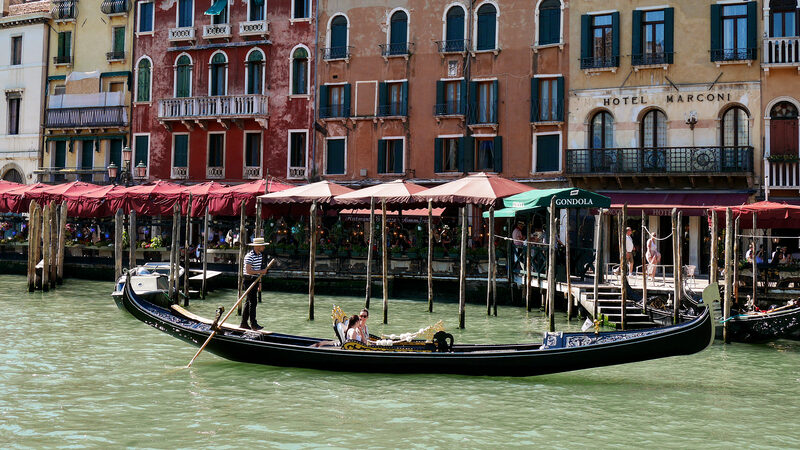
After all, a gondola ride is a quintessential Venetian experience: timeless, romantic, and unlike anything else.
The most atmospheric rides usually venture along quieter side canals, where the city feels slower and more intimate. Some routes also pass along the Grand Canal or under the Rialto Bridge (3), where larger boats pass close by, and the water feels busier and more dynamic.
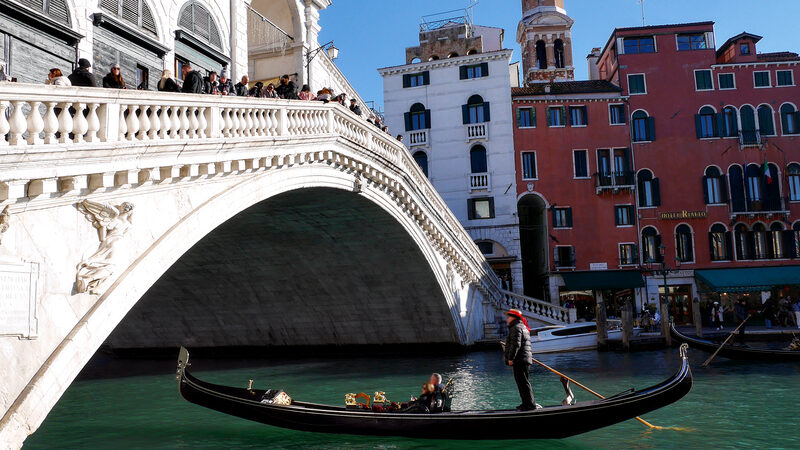
Gondola rides can be booked on the spot at a fixed city rate of €90 for a 30-minute ride. The price is per boat, not per person, and each gondola can carry up to five passengers. Payment is cash only.
If you're set on a gondola ride, we recommend booking one on the spot and deciding then whether you have enough time to spare.
With plenty of gondola stations along our proposed walks, you can easily make the decision as you go.
Alternatively, if you don't like leaving anything to chance, you can book a shared gondola ride online.
These are a more budget-friendly option for solo travelers or couples who don't mind sharing the boat with other passengers, and they also eliminate the need to handle cash.
The Extended Walk
Our second proposed walk picks up where the Short Walk ends, adding more sights without retracing your steps.
You've already reached St. Mark's Square (highlight 5 on our maps), but don't head back just yet.
Even after seeing Venice's two most iconic landmarks, there is still much more to discover, and this route continues into some of the city's most rewarding corners.
Route map and highlights
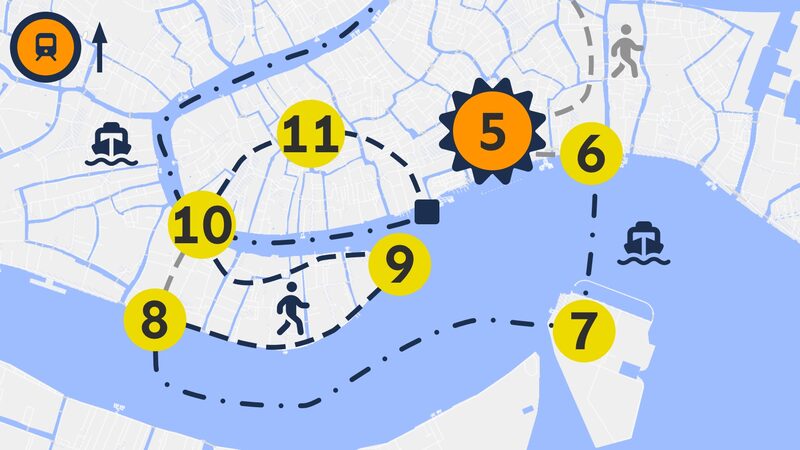
(5) St. Mark's Square (6) Riva degli Schiavoni (7) San Giorgio Maggiore (8) Zattere (9) Punta della Dogana (10) Accademia Bridge (11) Palazzo Contarini del Bovolo The route is designed to be flexible: it loops through the same area of Venice, so you can enjoy the complete walk if you have a full day, or shorten it easily using the suggested shortcuts if your time is limited.
(5) Before leaving St. Mark's Square
For the time available on the Short Walk, entering St. Mark's Basilica was a bit of a stretch. But with the extra time of the Extended Walk, it becomes a realistic addition.
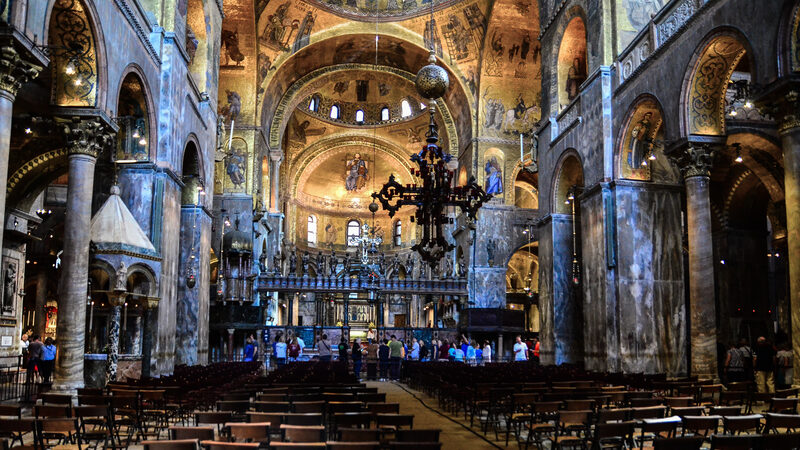
Tickets must be purchased online in advance, although last-minute availability often appears.
If you're unsure whether a visit inside is worth your time, or want to check ticket options, see our dedicated guide to the basilica.
(6) Taking the vaporetto to San Giorgio Maggiore
After leaving St. Mark's Square and reaching the Riva degli Schiavoni waterfront (6), you can take the line 2 vaporetto across the lagoon to visit San Giorgio Maggiore, the church on the island of the same name.
Yes, this is the iconic bell tower you spotted from the waterfront next to the Doge's Palace, the same silhouette that appears in so many classic views of Venice.
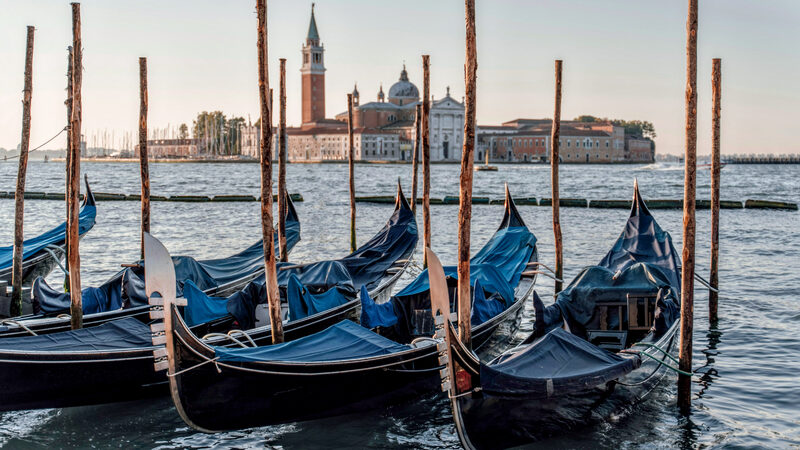
There are several docks serving the San Marco–San Zaccaria stop, but vaporetto line 2 usually departs from dock B every 12 minutes.
A single 75-minute ticket should be enough to reach the island and the next highlight (Zattere, 8 on the map), but since the route also includes a vaporetto ride along the Grand Canal later, a day pass may be a better option. We won't go into all the details about tickets and passes here; you can find everything you need in our dedicated vaporetto guide.
After boarding, it's only one stop across the lagoon before you arrive at the island of San Giorgio Maggiore, where the church and one of the most memorable panoramic views of Venice await.
(7) One of the best views of Venice
Even from the waterfront at San Giorgio Maggiore, you're greeted by an impressive panorama of the Venetian skyline across the lagoon, so it's only natural to want to linger.
But the best part is just a short elevator ride away, inside the church's bell tower.

From the top, the views stretch in every direction: Venice's skyline on one side, the endless lagoon on the other.

In our opinion, this is the best-value panoramic viewpoint in Venice: it is less expensive than the St Mark's Campanile, offers a similarly spectacular elevated view, and rewards you with the Campanile itself rising in the skyline.
Besides the church, there's more to see on the island. The Cini Foundation hosts art exhibitions and looks after the island's gardens and open-air amphitheatre.
But if you only have time for one extra stop, we'd recommend the free-to-enter Le Stanze del Vetro, where changing exhibitions explore the art of glassmaking through contemporary creations.
(8) Zattere: One of Venice's favourite promenades
Time to return to walkable Venice.
Most visitors head back to St. Mark's Square, but we'd suggest doing something different: board vaporetto line 2 in the opposite direction and get off four stops later at Zattere.
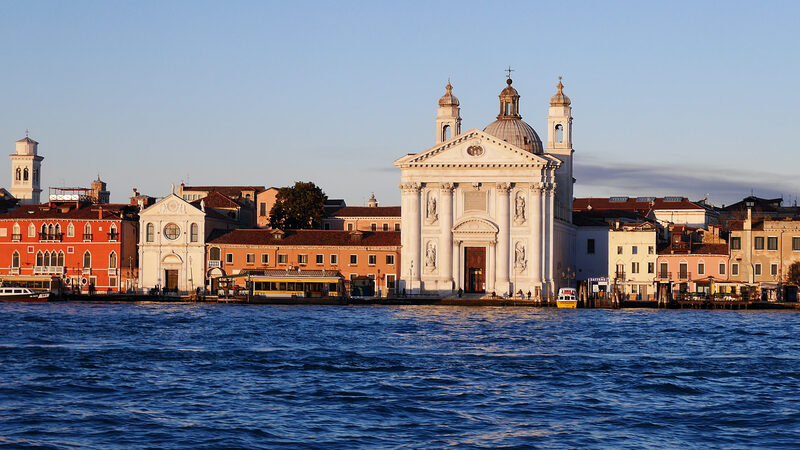
Especially on sunny afternoons, this nearly 2 km waterfront is a favourite spot for Venetians to stroll, chat, and enjoy a gelato by the lagoon. It's one of the best places to experience a more local side of Venice while enjoying sweeping views across the water.
If you're running out of time, this is the moment to take the 5-minute walking shortcut to highlight 10, Accademia Bridge.
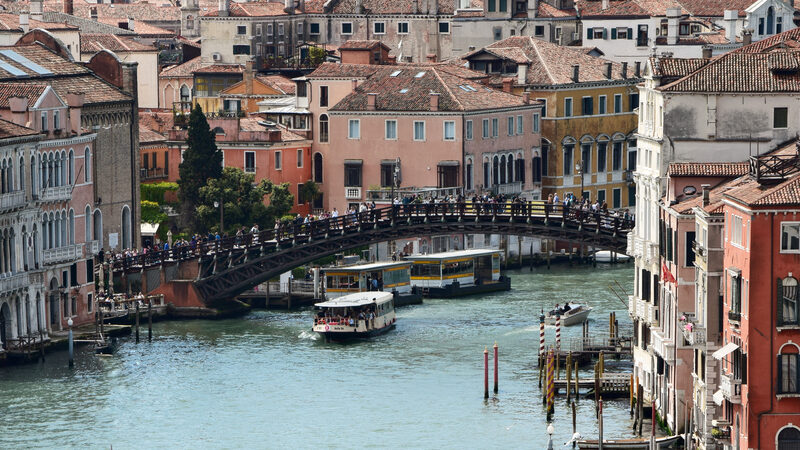
But if you can spare an extra hour, we highly recommend continuing east and walking the entire promenade to its very end.
Along the way, you'll enjoy uninterrupted views across the lagoon, with San Giorgio Maggiore always in sight, and maybe pause for a plate of cicchetti, Venice's famous bite-sized snacks.
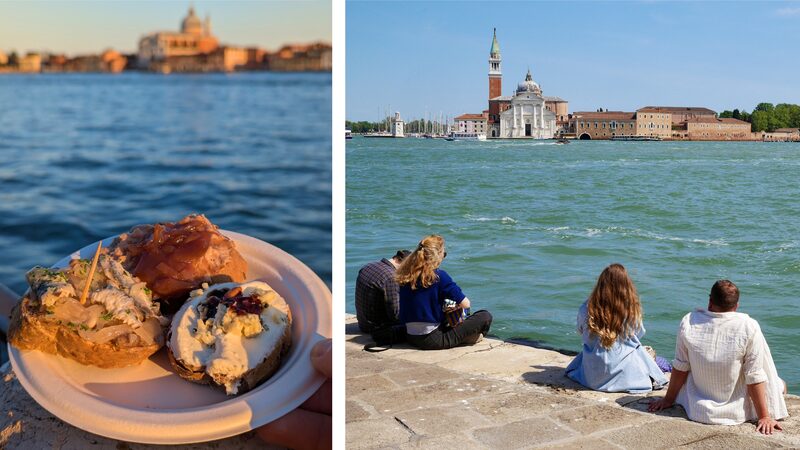
At the eastern tip, where the Grand Canal opens into the San Marco Basin, the panorama comes full circle as Venice's most familiar landmarks reappear before you. This is Punta della Dogana, your next highlight.
(9) Punta della Dogana
Punta della Dogana is a contemporary art museum housed in the former 17th-century customs house.
While it's well worth a visit if contemporary art interests you, our focus here is the sweeping panorama across the San Marco Basin. If the last few stops made you forget how busy Venice can be, this is where the crowds return.
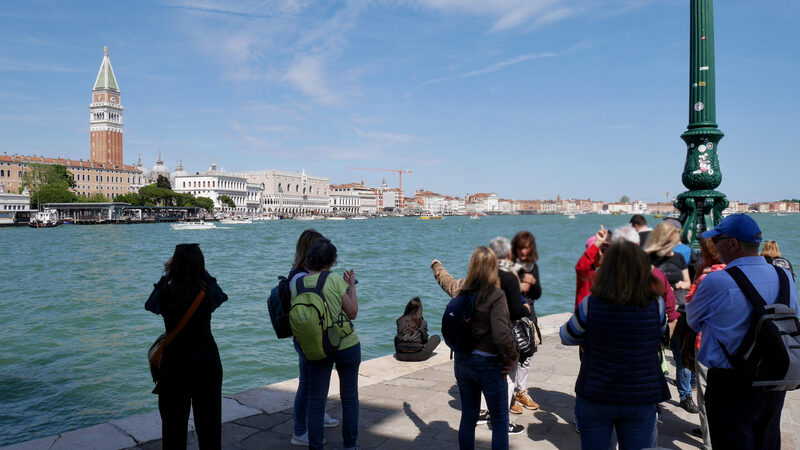
Just around the corner rises another icon of Venice: Santa Maria della Salute.
Its exuberant Baroque facade, crowned by a magnificent dome and adorned with more than a hundred statues of saints and angels, dominates the entrance to the Grand Canal.
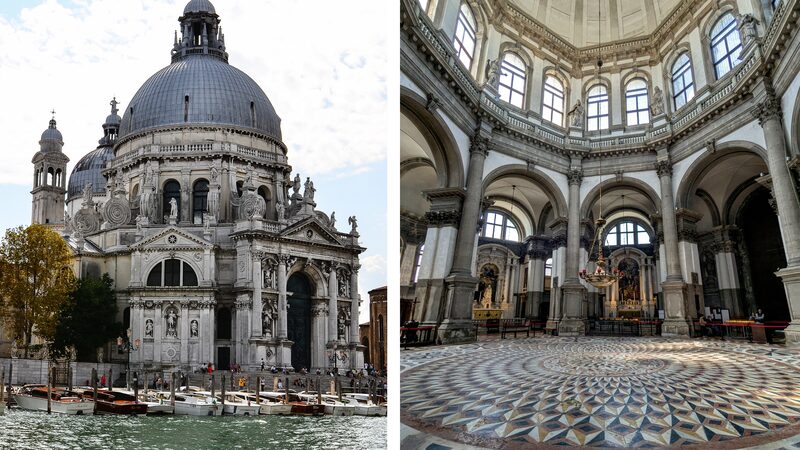
Admission is free, so it's well worth entering through its monumental doors to experience the unusual octagonal layout and vast domed interior: a surprisingly restrained contrast to the exuberance of the exterior.
If you have extra time, two paid additions are especially worthwhile: the Sacristy for masterpieces by Titian and Tintoretto, and the dome balcony for spectacular views over Venice and the Grand Canal.
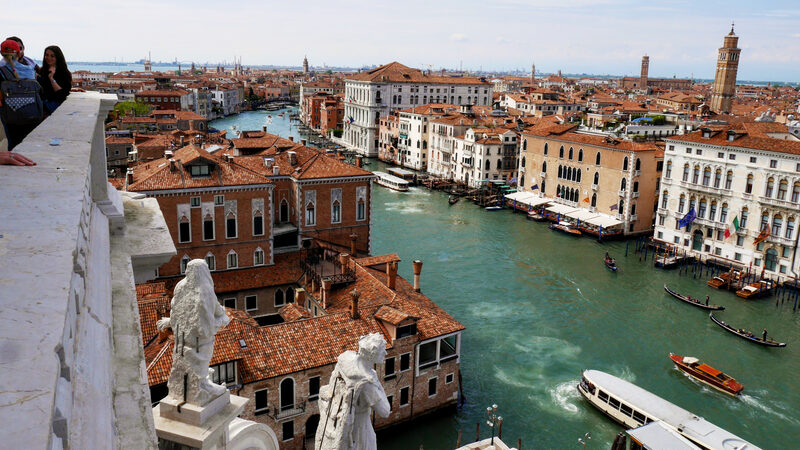
Continue westwards through the narrow calli of Dorsoduro, passing the Peggy Guggenheim Collection before reaching the Accademia Galleries: this compact corner of Venice is surprisingly rich in world-class art museums.
(10) Accademia Bridge
This wooden bridge needs no introduction. It may be the second crossing of the Grand Canal in chronological order, but it's the view that draws everyone here.
While crossing it, you'll be rewarded with one of Venice's most iconic postcard views: the Grand Canal stretching towards the magnificent dome of Santa Maria della Salute.
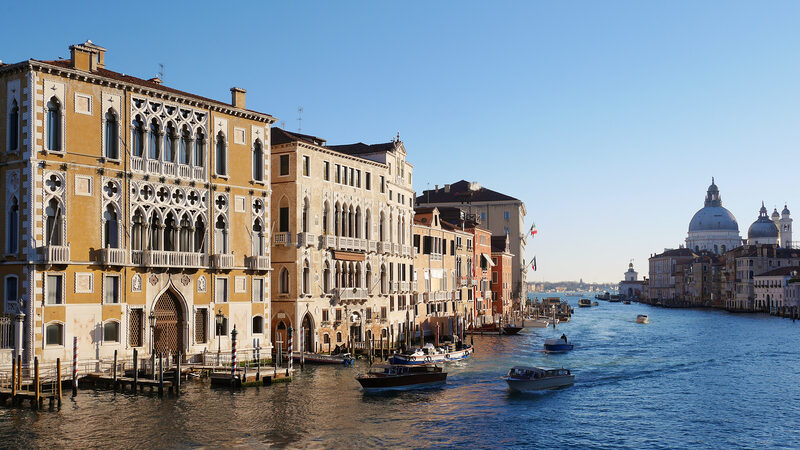
Here's another convenient point where you can shorten the walk if needed. Vaporetto line 1 departs from the Accademia stop beside the bridge and reaches the train station in about 35 minutes.
But if you still have some time to spare, we'd love to show you one last side of Venice.
(11) The heart of the San Marco district
To enjoy the full Grand Canal cruise, the most convenient place to board line 1 is the nearby San Marco Vallaresso vaporetto stop. Rather than walking there directly, we'll use this final stretch to uncover a few special corners of Venice's busiest district.
Leave Accademia Bridge through the elongated Campo Santo Stefano, taking a moment to admire the fine details of Palazzo Franchetti and, behind it, the monumental Palazzo Pisani, Venice's largest private palace.
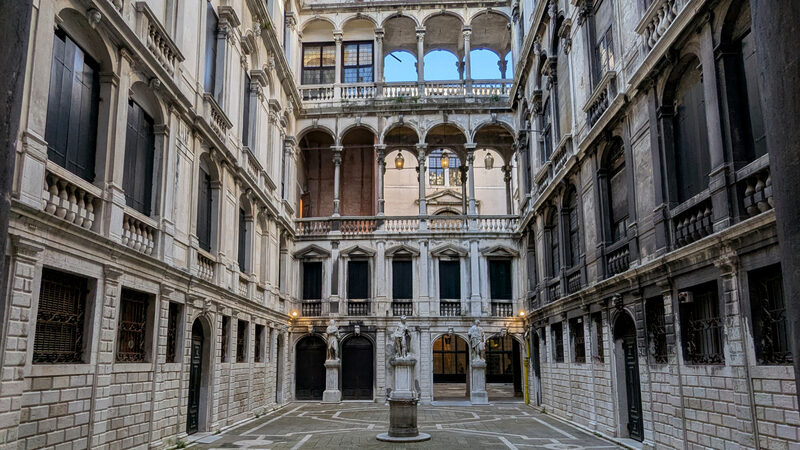
If you were to continue along this route, you'd eventually reach the Rialto Bridge, but instead, we're looking for a (nearly) secret calle that leads to one of Venice's most surprising discoveries: the staircase of Palazzo Contarini del Bovolo, a striking spiral design that has become one of the city's most photographed corners.
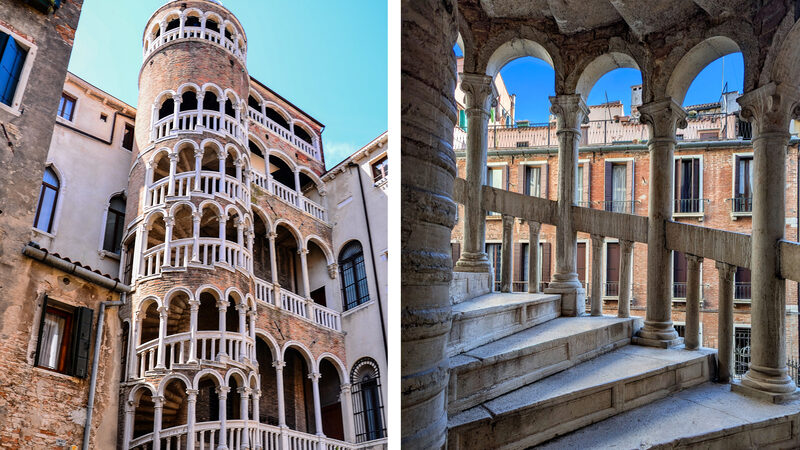
You may feel like giving up along the way, especially when you arrive at Campo Manin and find yourself facing a rare example of contemporary architecture in Venice's historic fabric (a rather generous description). But this is exactly where the narrow passage to Palazzo Contarini del Bovolo begins.
Once in the narrow courtyard, you can admire the staircase and consider the climb: the ascent is a little dizzying and the rooftop views are lovely, but after so many panoramas along this walk, it feels more like a bonus than a must-do.
Leaving the palace, backtrack until the first intersection, then turn right.
At the end of the alley, where it meets Calle dei Fuseri, turn right again towards Ponte dei Fuseri: a good example of a ponte storto, a bridge built on a diagonal alignment. This was a common solution in Venice, where the dense urban fabric often made a straight crossing impossible.
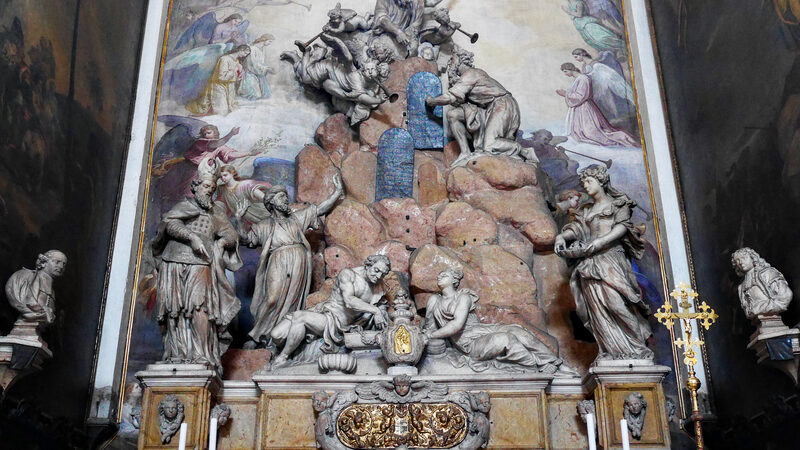
With the vaporetto stop only a few minutes away, you may still have time for one last detour: either Bacino Orseolo, an unusual canal corner where dozens of gondolas wait for their next passengers, or the church of San Moisè, whose exuberant Baroque facade is a feast of sculptures and, inside, an remarkable altarpiece combines frescoes, sculptures and ... actual boulders.
The Grand Canal finale
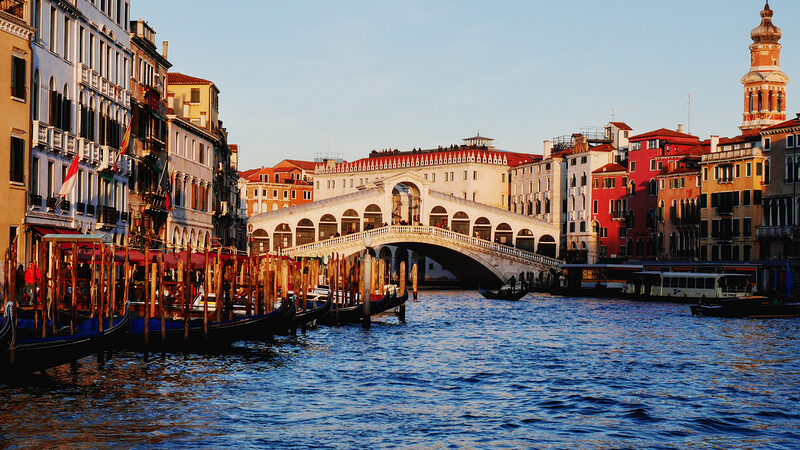
After all those extra stops, the Extended Walk finally rejoins step (6) of the Short Walk, this time from the San Marco Vallaresso vaporetto stop: take line 1 back to the train station, cruising the Grand Canal for about 40 minutes.
The same advice applies: try to grab a seat at the front for the best views of the lavish palace facades lining the Grand Canal, along with a chance to see some of the familiar sights from a different perspective. What a way to end a great day!
Just a quick reminder: a one-day vaporetto pass could come in handy by saving you the hassle of buying individual tickets and even working out cheaper if you also took the vaporetto to the Rialto Bridge (3) at the beginning of the walk.
What's next?
If you've decided to spend a few more days in Venice, or you've already been here before, take a look at our Venice Unveiled series.
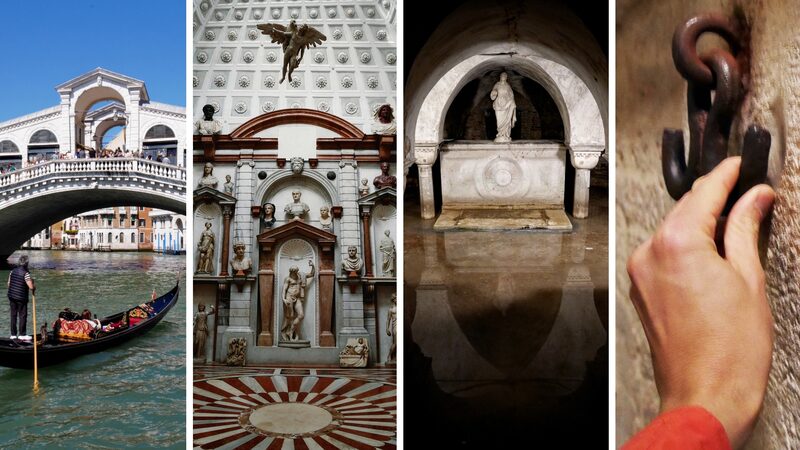
What is Venice Unveiled?
It's a section of our guide that reveals the city in four layers, from iconic sights for first-time visitors to insider favorites known mainly to returning visitors.
It helps you find things to do that match how well you already know Venice.
Find your Venice
Tailored picks to match your travel style, mood, or interests.